What is Pinterest? Direct Answer and Overview
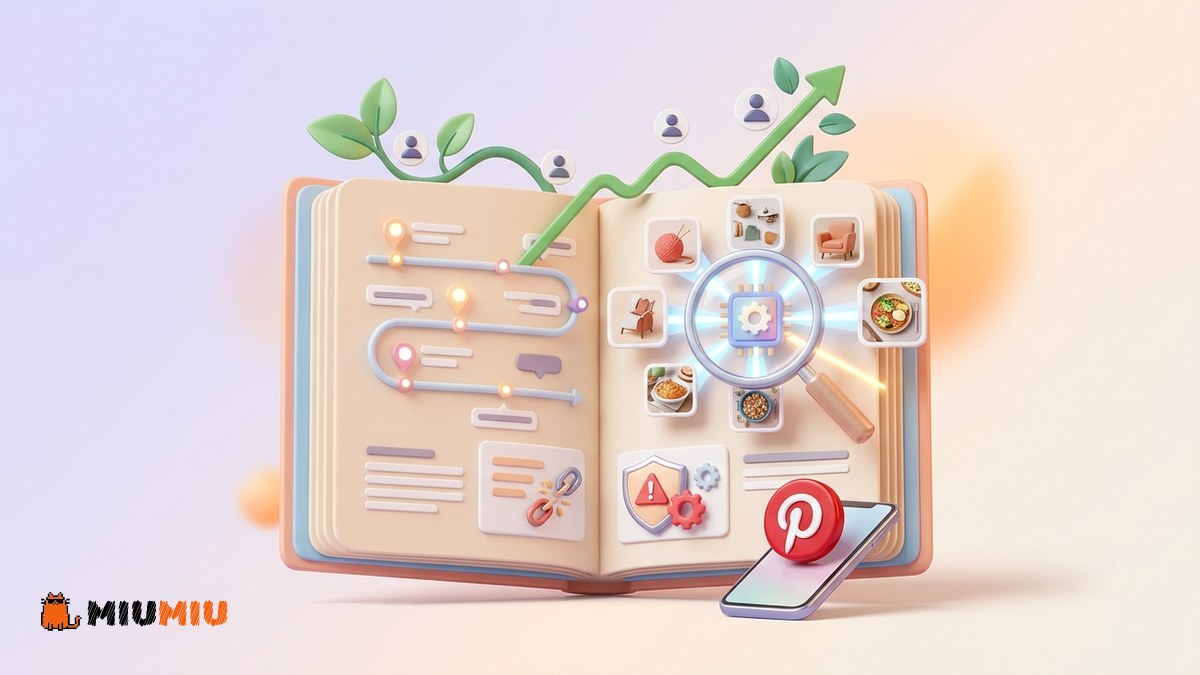
Pinterest is a visual search engine and digital discovery platform where users find, save, and organize ideas, projects, and products in virtual folders called "boards" using images and short videos called "pins". Unlike standard social networks that prioritize immediate social interactions and transient updates, Pinterest is designed for future planning and consumer inspiration. With over 600 million monthly active users, it serves as a massive organic traffic acquisition channel for websites, content creators, and e-commerce stores worldwide.
The Comprehensive History of Pinterest: From Failure to the NYSE
The story of Pinterest is a classic Silicon Valley journey of adaptation and vision. The platform was founded in late 2009 by three creative minds: Ben Silbermann (a former Google advertising analyst), Paul Sciarra (an entrepreneur and investor), and Evan Sharp (an architect and designer).
The Predecessor: The Failure of Tote
In 2008, Ben Silbermann and Paul Sciarra co-founded an app development firm called Cold Brew Labs. Their initial product was an iPhone application named Tote, which served as a digital replacement for paper shopping catalogs. While innovative, Tote failed because mobile payment infrastructure in 2009 was not sufficiently advanced, making transactions on the go difficult for consumers. However, Silbermann observed an intriguing user behavior: instead of completing purchases, users were using the app's favorite button to save items and email those images to themselves for later viewing. This distinct insight led to the realization that users wanted a dedicated platform to collect and organize ideas visually.
The Inception and Launch of Pinterest
The core concept of Pinterest was developed between November and December of 2009. The name was suggested by Silbermann's girlfriend, combining "pin" (the physical act of placing items on a corkboard) and "interest" (the subject matter). In March 2010, the first prototype of Pinterest was launched in a closed beta format, available only to a small circle of colleagues and family members. To generate early interest and maintain high community standards, registrations were kept invite-only during its initial phase.
Key Milestones and Acquisitions
The platform's historical trajectory is defined by several landmark product launches and strategic moves:
- 2011 (Mobile Expansion): Pinterest launched its first dedicated iPhone app, which quickly surpassed download projections. In the same year, Time Magazine named Pinterest one of the "50 Best Websites", and the platform reached 10 million monthly active users.
- 2012 (Open Registration): Registration was opened to the general public, leading to historic organic traffic growth. During this period, Paul Sciarra stepped down from his day-to-day operational role to become an entrepreneur-in-residence at Andreessen Horowitz, retaining his equity.
- 2013 (Ad Monetization): The platform introduced its first advertising product, Promoted Pins, allowing brands to bid for prominent placement.
- 2015 (Pinterest Lens & Commerce): Pinterest launched Pinterest Lens, a revolutionary visual search tool that allows users to snap photos of real-world objects and find matching pins. It also launched Buyable Pins, facilitating direct commerce.
- 2017 (Acquisition of VGST): Pinterest acquired Visual Graph Search Technologies (VGST) to enhance its computer vision and image classification capabilities.
- 2019 (The IPO): On April 18, 2019, Pinterest transitioned into a publicly traded corporation on the New York Stock Exchange (NYSE) under the ticker symbol PINS, debuting with an initial valuation of approximately 12.7 billion dollars.
- 2021 (Idea Pins): To keep pace with the short-form video trend, Pinterest rolled out Idea Pins, a multi-page video format tailored for creators.
- 2022 to 2026 (Leadership Shifts & AI Integration): In 2022, Bill Ready, former president of commerce at Google, took over as CEO. Under his leadership, the platform pivoted heavily toward social commerce and performance advertising. In early 2026, Elliott Investment Management made a massive 1 billion dollar strategic investment in Pinterest, authorizing a new 3.5 billion dollar share repurchase program and solidifying its position as the largest shareholder. Over the last few years, Pinterest has pioneered inclusive AI technologies, allowing users to filter search results by skin tone range and hair pattern, while driving high-performance ad conversions using deep neural networks.
Ownership Structure: Who Controls Pinterest Today?
Pinterest (Pinterest, Inc.) is an independent, publicly traded corporation. Unlike competitors like Instagram, which is owned by Meta, or TikTok, which is owned by ByteDance, Pinterest is not owned by a parent conglomerate. It operates under a single-class share structure where founders do not hold supervoting shares. This means that institutional investors hold proportional voting power. Roughly 85 percent of Pinterest's outstanding shares are held by institutional giants, including Vanguard Group, BlackRock, and Elliott Investment Management. The remaining shares are owned by public retail investors and company insiders, including executive chairman Ben Silbermann.
The Technical Ecosystem: How Pinterest Functions
To successfully market on Pinterest, it is crucial to understand the main elements that construct its platform:
1. Pins
Pins are the fundamental units of content. Each pin contains an image or video, a textual description, and a direct outbound hyperlink. They are split into three main formats:
- Standard Pins: Flat images linking directly to an external URL.
- Video Pins: Highly engaging, short videos explaining tutorials, recipes, or style tips.
- Rich Pins: Automatically synchronized pins that pull live metadata directly from the source website. These are divided into Product Pins (showing live pricing and stock), Recipe Pins (showing ingredients and cooking times), and Article Pins (displaying the headline, author, and description).
2. Boards
Boards act as virtual categorized folders. Users pin related items to specific boards (for example, "Modern Living Room Ideas" or "Summer Outfits"). Boards can be shared publicly or set to secret boards for private planning.
3. Pinterest Lens
The camera-based visual search tool that uses machine learning to match real-world physical objects with relevant digital pins and retail stores.
How the Pinterest Algorithm Works
Pinterest is structurally a visual search engine. Its ranking algorithms evaluate several primary signals to index and distribute content:
- Domain Quality: The trust rating of the source website. Websites that are claimed, utilize Rich Pins, and drive consistent traffic are favored by the indexing bot.
- Pin Quality: Measured by user engagement signals, including close-ups, saves (repins), and outbound clicks. High-performing pins are pushed to broader audiences.
- Topic Relevance: The algorithm scans the visual pixels of the image using computer vision and cross-references it with the pin title, description, alt text, and the keywords of the board it was pinned to.
- Pinner Quality: The consistency and trustworthiness of the account creator. Publishing fresh pins consistently improves your account's authority and reach.
Because it operates as a search engine, the shelf life of content is vastly different from social media networks. For instance, while a post on Instagram has a shelf life of 24 to 48 hours, a single search-optimized pin can drive consistent outbound traffic to a website for months or even years.
Who Uses Pinterest and Why?
Demographics and behavioral intent set Pinterest users apart from other web users:
- High Purchase Intent: Users browse with a planning mindset. They are actively seeking inspiration for weddings, home renovations, style updates, or recipes, making them highly receptive to commercial offers.
- Decentralized Branding: Over 95 percent of searches on Pinterest are unbranded (such as "minimalist kitchen decor" rather than a specific brand name). This offers small businesses and independent shops a level playing field to compete with global enterprises.
- Growing Demographics: While women historically represent the majority of the user base, Gen Z and male users are the fastest-growing cohorts, searching for tech, men's fashion, photography, and DIY projects.
Platform Comparison: Pinterest vs Instagram vs TikTok
| Feature | TikTok | ||
|---|---|---|---|
| Core Utility | Visual search engine and future planner | Social networking and content sharing | Short-form video entertainment |
| Content Lifespan | Months to years (Long-term discoverability) | 24 to 48 hours (Short-term) | A few days (Highly transient) |
| Traffic Generation | Exceptional (Direct links on every pin) | Limited (Link in bio or story stickers) | Very restricted (Single bio link) |
| Ranking Signals | Keywords, visual recognition, domain authority | Engagement rate, relationships, trending audio | Watch time, completion rate, interaction |
| User Mindset | Planning, learning, and purchasing | Connecting with friends and content consumption | Passive entertainment and viewing trends |
Organic Growth Checklist: Optimizing Your Presence
- Set Up a Business Profile: Convert your personal account to a free business account to access analytics and verification features.
- Claim Your Domain: Link your website to your profile to build domain authority and unlock deeper metrics.
- Enable Rich Pins: Integrate metadata into your website to automatically sync product prices, recipe data, or article details.
- Perform Keyword Research: Use the auto-complete search bar on Pinterest to identify high-volume search phrases and insert them naturally into your titles and descriptions.
- Use a 2:3 Vertical Aspect Ratio: Create pins using vertical images (ideally 1000 by 1500 pixels) as horizontal layouts are visually deprioritized.
- Pin Fresh Content Consistently: Avoid repeatedly repinning the exact same image. Prioritize designing unique visual assets for your links.
Pinterest in the Digital Marketing Landscape
To craft a holistic multi-channel strategy, it is useful to see how Pinterest compares with other networks. If your focus spans text-based conversations, read our comprehensive guide to Threads or the X (Twitter) platform guide. To compare how search and visual discovery algorithms differ from video-centric giants, explore the 2026 Instagram Algorithm analysis and our TikTok comprehensive guide. Understanding these distinct mechanics is key to diversifying your organic reach.
Growth Services: Technical Analysis, Benefits, and Risks
To speed up the indexing process and establish early trust signals, some creators choose to supplement their efforts. At MIUMIU, we offer specific services tailored to this ecosystem:
- Pinterest Traffic to boost early visitation metrics.
- Pinterest Saves to signal keyword-specific relevance and popularity to the search system.
- Pinterest Followers to establish a baseline of social proof for new profiles.
Real Risks and Honest Limitations
At MIUMIU, we value honesty. Growth services are minor catalysts and should never replace organic optimization. Consider the following realities before utilizing these tools:
- No Refill and No Cancel: All of our Pinterest services are provided on a non-refillable and non-cancelable basis. If there are fluctuations or drops in numbers over time, we do not offer manual refills or cancellations.
- Algorithmic Penalties: Visual search platforms run highly sophisticated bot detection tools. Drastic, unnatural spikes in engagement without proper organic content foundations can lead to shadowbanning or your domain being blacklisted. No platform is completely risk-free, and we do not promise immunity from penalties.
- Organic Core Requirement: Purchased metrics will not substitute for lack of keyword optimization, poor design, or inconsistent pinning. For real, sustainable conversions, you must maintain a robust organic strategy.
Conclusion
Pinterest is an exceptional marketing asset that operates on search engine rules. By capitalizing on its long shelf life, high-intent demographics, and direct-linking architecture, brands can generate reliable organic traffic. While you can utilize tools from MIUMIU to provide early signals of authority, your ultimate success depends on consistent, high-quality, search-optimized visual content.
Frequently asked questions
Is Pinterest still viable in 2026?
Absolutely. With over 600 million monthly active users and deep integrations with AI-driven social commerce tools, Pinterest remains one of the most reliable and cost-effective organic traffic drivers for online businesses.
How does Pinterest compare to Instagram?
While Instagram focuses on social engagement and real-time community sharing, Pinterest works as a visual search engine for future planning. Content on Pinterest has a significantly longer lifespan and provides far superior direct linking features.
Why are my pins not gaining traffic?
Common issues include failing to use a vertical 2:3 ratio, neglecting keyword research in your descriptions, failing to claim your domain, or lack of consistency in posting fresh visual content.
Are growth services safe to use on Pinterest?
These services can act as social proof and early indicators of engagement, but they are not entirely risk-free. Pinterest continuously updates its security measures to detect artificial traffic. Overuse without a strong foundation of organic SEO can lead to account limitations. Additionally, these services at MIUMIU do not include drop protection or refills.
Sources & references

Writer, Content Team
I write for the MIUMIU content team, mostly around growth strategy and making content: how to create stuff people actually save and share. My pieces are usually full of examples and checklists so they're easy to put into practice.